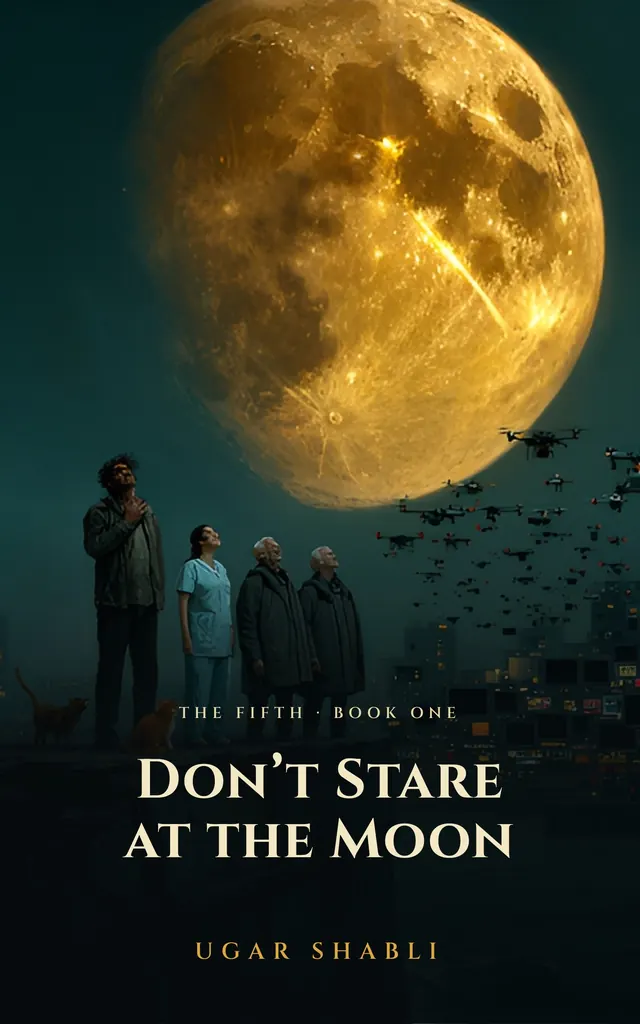
There was no Moon. Then somebody broke a world.
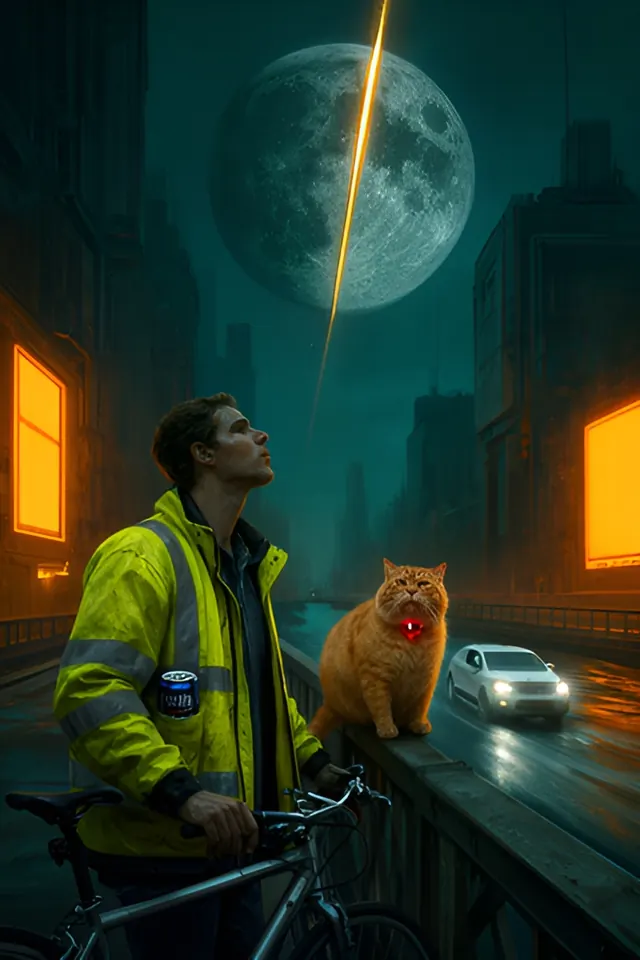
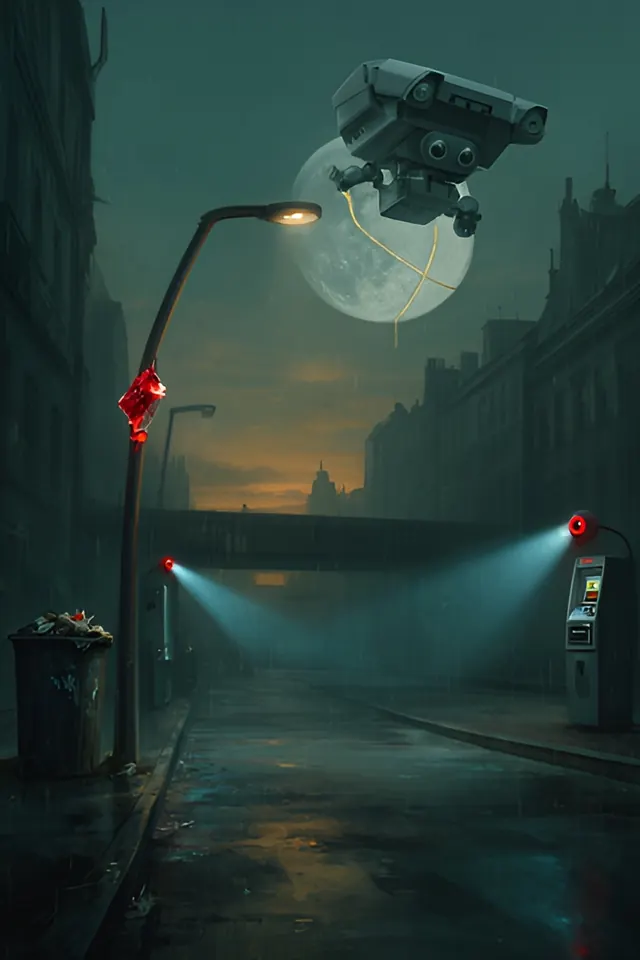
Gus Fifer is thirty-four, a food-delivery courier for Gulp, an app that fines him for pausing, for his tone, and for looking at the sky. His Courier Score is sinking, his debts are not, and Metro Seven, the city everyone calls Sodium City, glows like the inside of a mouth with a cigarette in it. People answer in slogans. The cameras blink hello. The banner on the Hollis Tower says YOU'RE DOING GREAT.
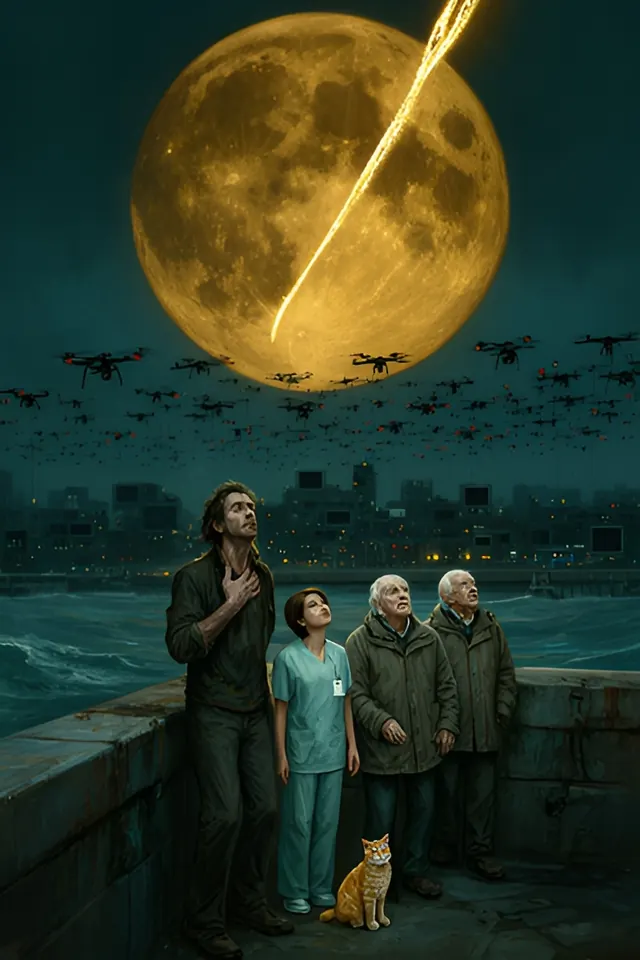
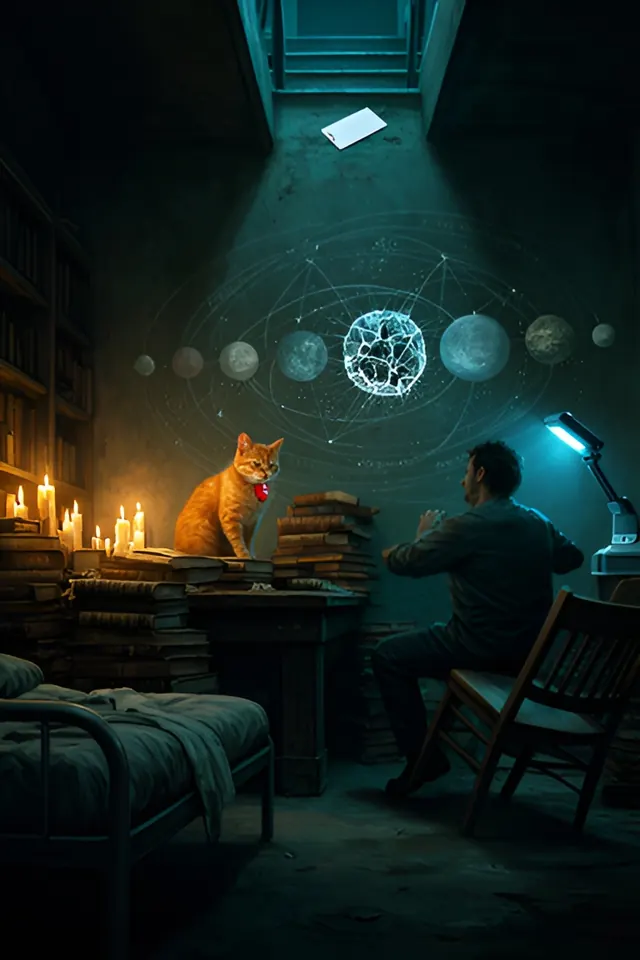
Then, one night at high tide, on a canal footbridge, Gus looks up and sees it: a hair-thin golden seam running across the Moon. It hums. His fillings hum back. And a heavyset ginger cat on the fence beside him says, very clearly, “Don't stare. They count who stares.”
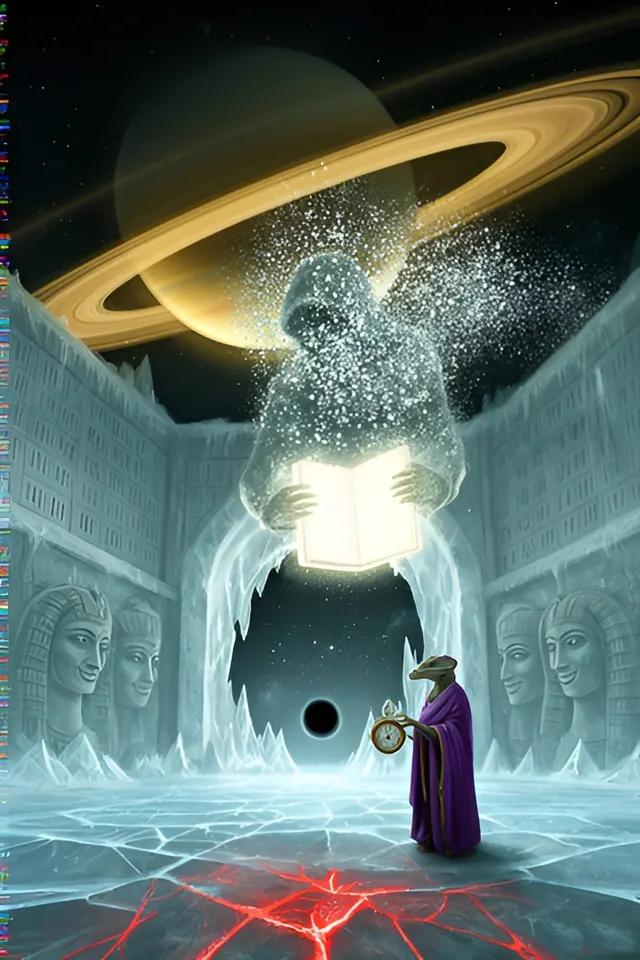
Twelve thousand years ago the year had 360 days, there were no tides, and nine worlds shared a single mind, a Song that needed no voice at all. The fifth of those worlds, Phaeton, was its heart. Somebody wanted that heart broken. The few who still remember are hiding in plain sight: a prickly shapeshifter who prefers to be a cat, two ancient bickering twins in matching beige anoraks, and the secret of what really hangs in our night sky.
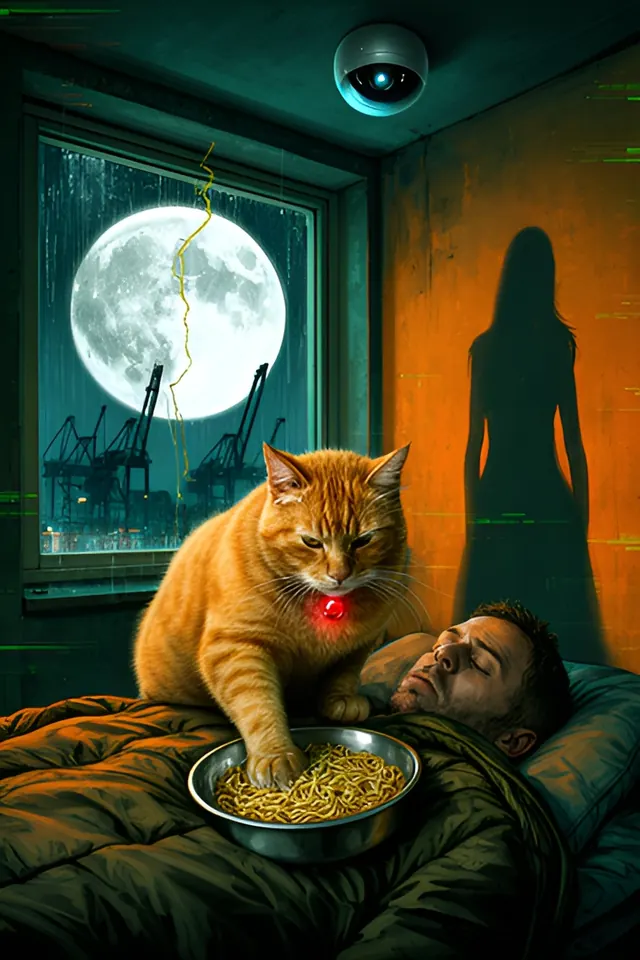
Now a very polite inspector in a very good suit is running a census, the lampposts are listening, and Gus, who has slept through his whole life, is the only one who can't stop hearing the hum.
Alternating between a neon dystopia that feels about ten minutes from now and a mythic lost age told from every one of the nine planets, Don't Stare at the Moon is funny, filthy and quietly furious: a story about a numbed city, a hidden people, and one man too tired to keep looking away.
Contains strong language.